 GILL CHRISTIE
Coming 2027
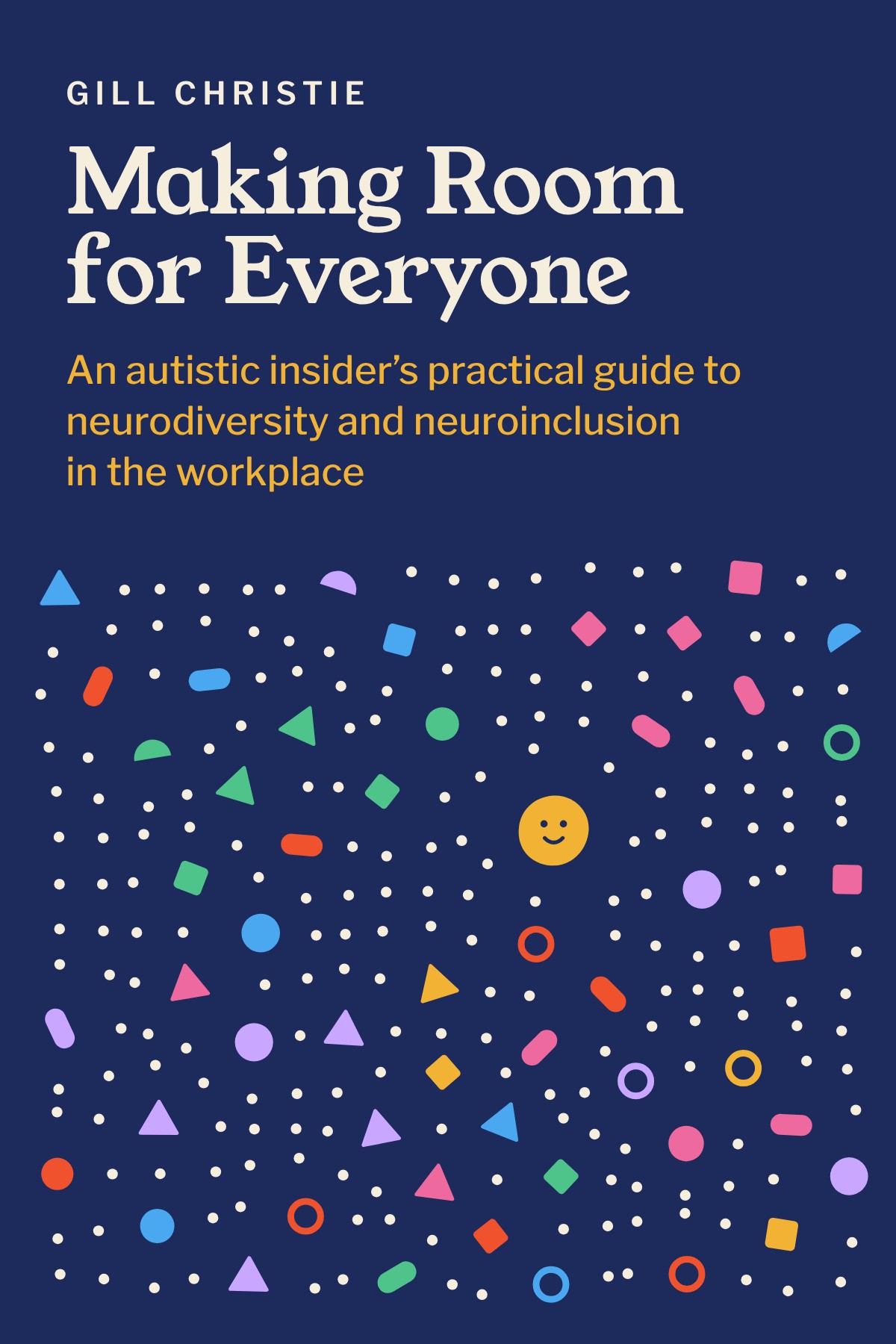
Making Room for Everyone
An Autistic Insider’s Practical Guide to Neurodiversity and Neuroinclusion in the Workplace
A practical guide, grounded in lived experience. For anyone who has ever wondered whether they belong at work – and for the managers, HR teams and colleagues who want to make sure they do.
The book
I wrote it for you.
You, if you’ve ever doubted whether you truly belong at work. And you, the manager, HR professional or colleague who wants to make sure everyone does.
Part 1, Finding your fit, is for you if you know or suspect your brain works differently. It covers masking and what it costs, managing your energy, surviving transitions, and the eternal question of who to tell and who not to.
Part 2, Helping everyone fit in, is for you if you have other people to look after. It covers why neuroinclusion so often fails, and what managers, HR and allies can actually do about it.
Start wherever you like, but please read both. Part 1 shows a manager what it costs to look ‘fine’. Part 2 shows an employee what they can ask for.
I wrote this book because I grew up, and then some, not knowing the root of my difference. Going through an autism diagnosis for one of my children began a journey of discovery that landed, with a bump, at my own diagnosis in my late 40s.
By then, I was already advocating for my neurodivergent kith and kin, as chair of our staff Neurodiversity Network and for children at my kids’ schools. What that taught me is that neurodiversity is often portrayed as them and us, when the word itself encompasses everyone.
We won’t always get it right. But when things go wrong, it’s usually down to a lack of understanding, of our own needs or of other people’s. That’s why these conversations matter – and why we have the power to change things, you and I. We just need faith, trust and a little bit of pixie dust empathy for one another.
There is room for everyone. This book is my part of that conversation.
Thrums, noun
In weaving, the loose ends left on the loom. The proof of the making, and the beauty of it.
About Gill
I can’t leave a loose thread alone.
If I see one, I have to touch it, play with it, run my fingers over it until I find where it leads. Sometimes it leads nowhere in particular – and what can I say, I find joy in the little things – so I set it aside for later. You never know when loose threads will come together into a new tapestry.
That habit has served me well. In my day job as an editor at an investment management firm, I bring reader and writer together, using words and structure to help each understand the other. It turned out to be good training for chairing a staff neurodiversity network, which is mostly the same job: helping people understand one another, and making work better for everyone along the way.
Often, the conversation starts with the same question: “Is it just me?” The answer is usually no. But if you don’t ask, you go on thinking it is. It’s not. As a late-diagnosed autistic woman, I learned that the long way round, pulling on threads until the connections appeared. Now I turn small moments of neurodivergent life into bigger conversations about work, communication and belonging.
I deliberately keep the thrums in my writing and advocacy. They show how my life was woven and how my brain works: the late discoveries, the side paths, the odd connections, the threads that don’t quite run straight but somehow work out in the end.
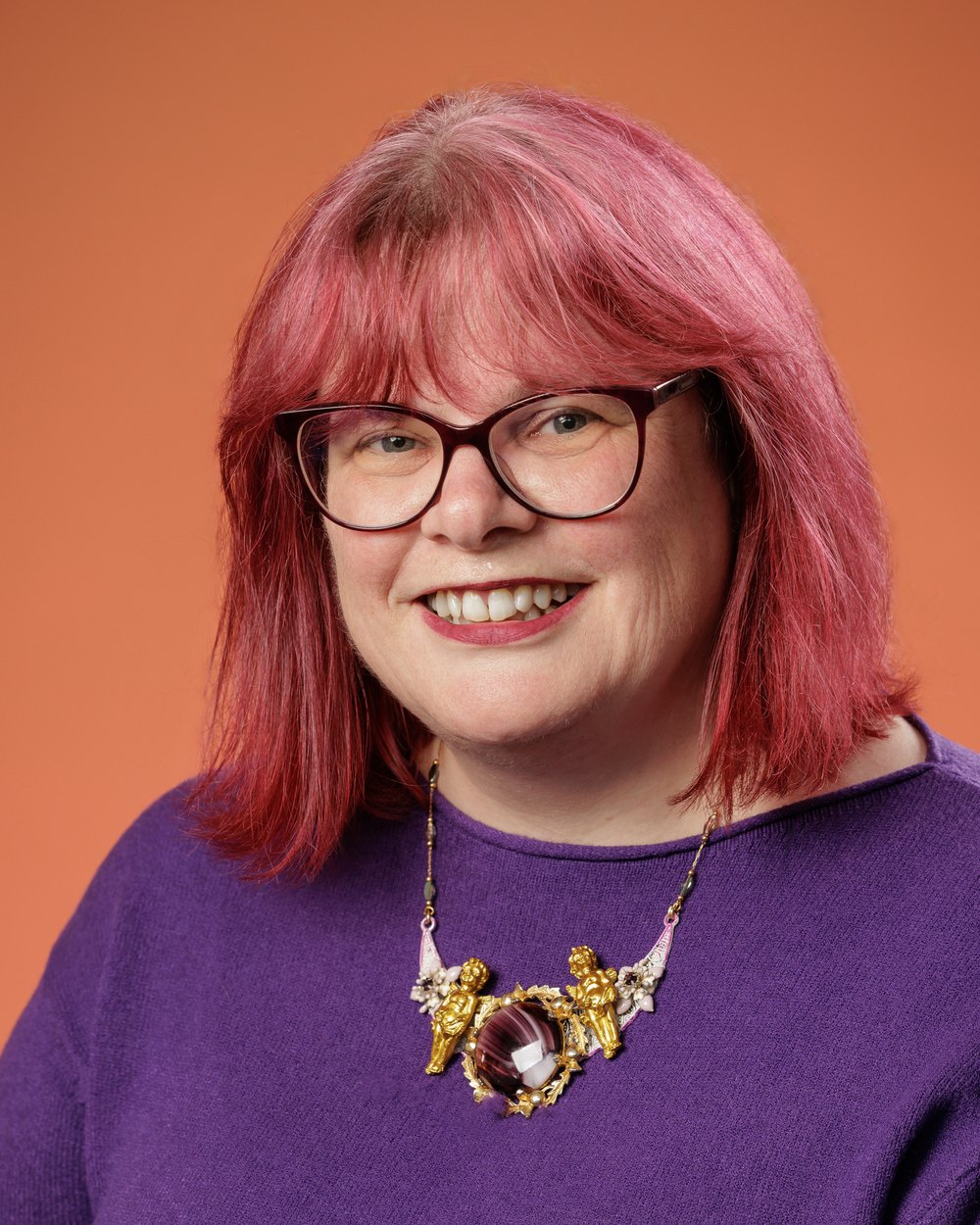
I live in Edinburgh with my husband, our two to three young people (depending on university term times) and one dog who knows she is a princess. I take my dopamine hits from my family, purple hair and quirky necklaces, because life is meant to be full of colour and divergent threads.
Contact
Get in touch
Get in touch to arrange a talk, training or a session for your employee network – or with a question about the book, or a thread you’d like to pull on. I’d love to hear from you.